Care without gaps
Born from personal frustration with fragmented mental healthcare, Psync is transforming how therapists and patients work together toward lasting mental wellbeing.
Letter from the founder
It started with frustration
Like many people navigating mental healthcare, I experienced firsthand the challenges of inconsistent care, fragmented information, and extended blind spots between therapy visits. The system wasn't broken—it was incomplete.
This frustration sparked something deeper. I dove into human psychology, mental health delivery, and the intersection of care continuity and administration. One question kept surfacing: what if technology could bridge the gaps without replacing the human connection that makes therapy work?
The exploration
Summer 2022—months before ChatGPT launched—I started exploring AI applications for mental healthcare. Sentiment analysis, clustering, mind mapping, analyzing thought patterns. The technology was nascent, but the vision was clear: use AI to enhance human connection, not replace it.
A machine learning course in college became the perfect confluence. Questions became prototypes. Prototypes revealed possibilities. And those possibilities showed me this could actually help people— but I couldn't build it alone.
Finding our team
I found my co-founder, and together we presented Psync at a business competition in Spring 2023. The judges were divided—some saw transformative potential, others raised valid concerns about privacy, HIPAA compliance, and AI's role in healthcare.
We earned recognition and, more importantly, clarity. The technology wasn't the hard part—earning trust was. We needed to build something that therapists would actually rely on and patients would feel safe using.
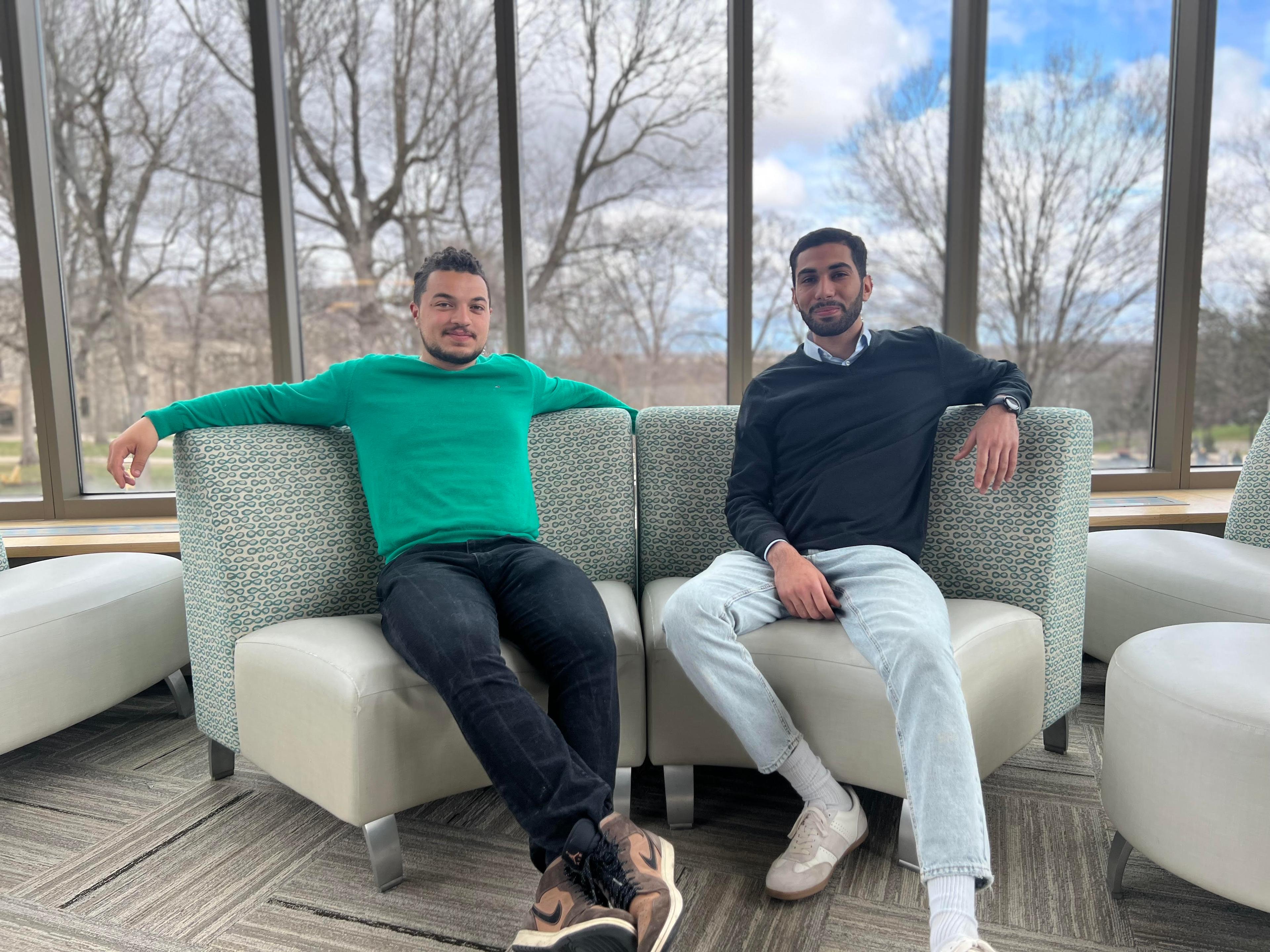
The Psync Health team
Validating the vision
Summer 2023 brought us to an accelerator program. Deep customer discovery taught us the problem wasn't unique—therapists and patients everywhere struggled with the same gaps in care continuity. Every conversation validated what we already suspected: the need was universal.
Through Fall 2023 and Winter 2024, we interviewed dozens of therapists, psychologists, and patients. Their stories echoed my own. The administrative burden. The information gaps. The anxiety between sessions. This wasn't just my frustration—it was systemic.
By Summer 2024, we joined an NIH entrepreneurship cohort, learning what it takes to build healthcare technology that can scale responsibly. Security. Compliance. Clinical validation. These weren't obstacles—they were the foundation we needed to earn trust.
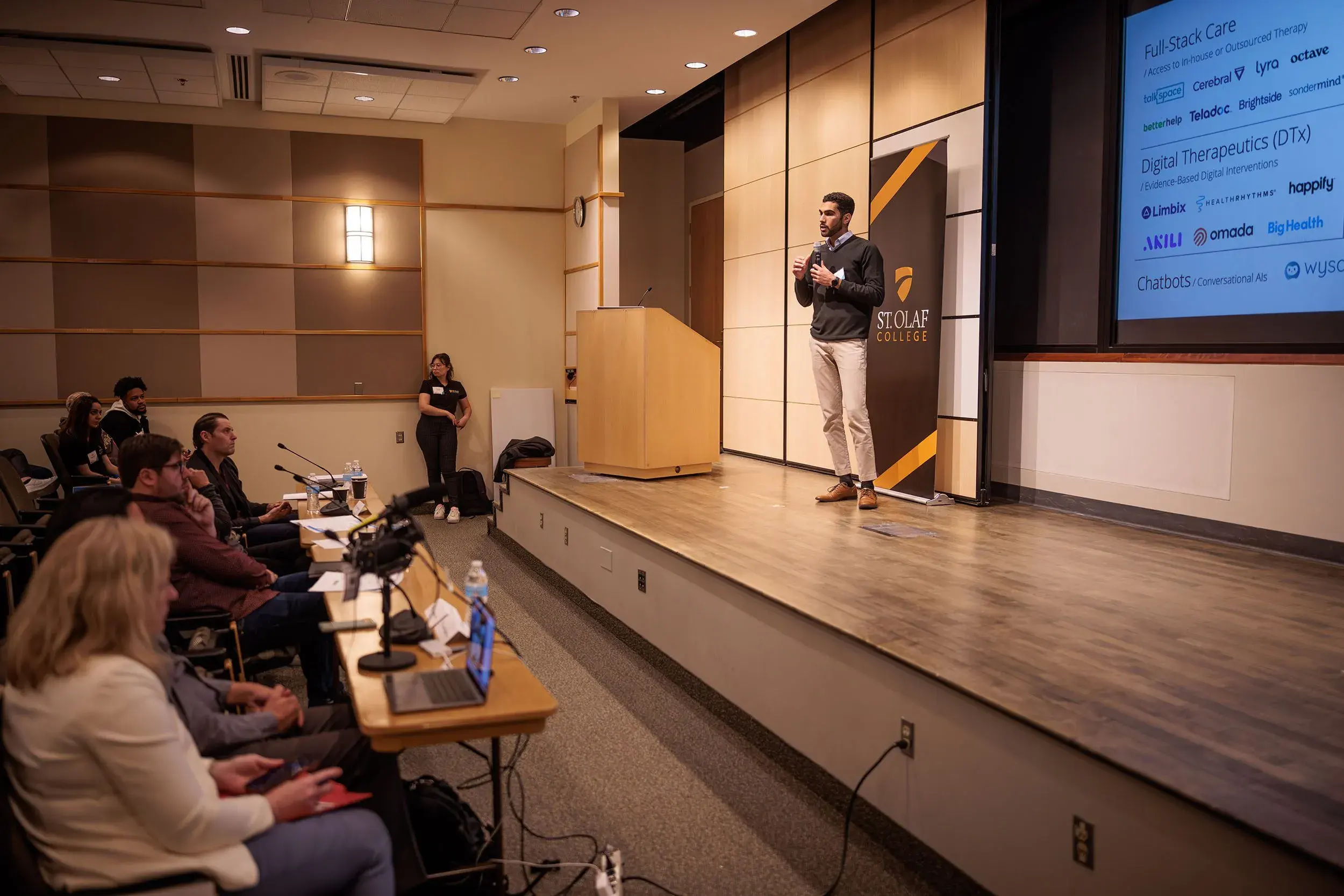
Presenting at Ole Cup 2023, St. Olaf College
Where we are today
After years of research, iteration, and learning from hundreds of conversations, we're releasing Psync for beta testing. Every feature reflects what we've learned: from therapists managing overwhelming caseloads, from patients struggling between sessions, from our own journey through the gaps in mental healthcare.
What started as one person's frustration has become a mission shared by our team. We're building tools that respect the therapeutic relationship while making care more continuous, more accessible, and more effective.
This is just the beginning. The vision that pulled us through the uncertainty is still ahead: a world where no one gives up on care because the system made it too hard to continue.
— Abdou Ghanim, November 2025
Built around human connection
Empowering therapists with intelligent tools. Helping patients stay connected between sessions. Making mental healthcare work the way it should—continuous, supportive, and effective.